
Athens Greece Travel Guide: The Ultimate Guide to Experience Athens Like an Insider
Updated: Jul 14
Nestled where the Balkan peninsula meets the glittering Aegean Sea, Athens is a city of extraordinary contrasts that defies every expectation visitors arrive with. A living museum where 3,000 years of history breathe life into every street, Athens is simultaneously ancient and modern, crowded yet surprisingly serene, a city that worships both the weight of antiquity and the electric energy of contemporary Mediterranean life. It is one of those rare destinations that rewards every traveler differently. It's a place where the history enthusiast finds a lifetime of discovery, the food lover finds a culinary scene that has quietly become one of Europe's most exciting, and the first-time visitor finds a place so layered, so alive, and so genuinely surprising that they begin planning their return before they've even left.
This Athens Greece travel guide covers everything you need to know to experience the city at its fullest, from its most iconic landmarks and hidden archaeological treasures to its extraordinary food scene, vibrant nightlife, luxury accommodations, and the day trips that make Athens the ideal base for exploring the wider Greece experience. And at the end, I'll share how working with a luxury travel specialist can transform a good Greece trip into an extraordinary one.
Understanding Athens: A City Unlike Any Other in Europe
Before diving into the specifics of what to see and do, it's worth taking a moment to understand what makes Athens genuinely different from every other major European capital because that understanding changes how you experience it.
Athens is the oldest capital city in Europe, with a continuous human presence stretching back over 7,000 years. The city that gave the world democracy, philosophy, theater, and the Olympic Games has been conquered, occupied, liberated, and rebuilt more times than most civilizations have existed. Every layer of that history is visible in the cityscape. Ancient Greek ruins sit beside Byzantine churches, Ottoman mosques stand around the corner from neoclassical parliament buildings, and contemporary street art covers walls that have witnessed millennia of human drama.
What surprises most visitors is how alive all of this feels. Athens is not a museum city where history has been cordoned off and preserved behind velvet ropes. It is a city of four million people living their daily lives in the midst of extraordinary antiquity. You'll find hanging laundry above archaeological sites, drinking coffee in the shadow of temples, arguing politics in squares where Socrates once walked. That quality of lived-in history, of antiquity as a backdrop to ordinary contemporary life rather than a carefully curated exhibit, is what makes Athens unlike anywhere else in the world.
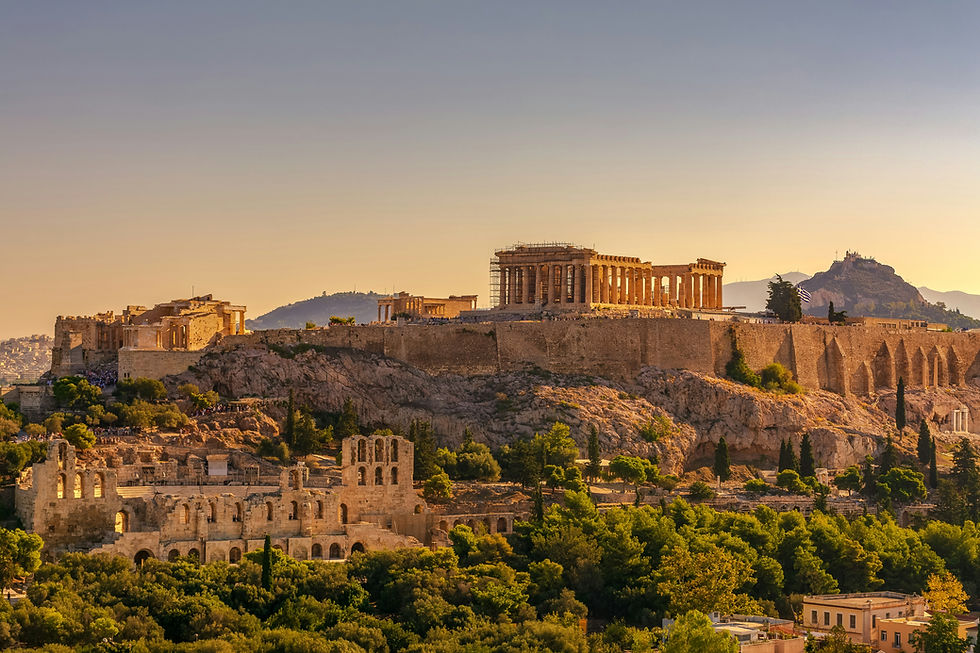
The Acropolis stands as Athens' eternal guardian, rising majestically above a landscape where ancient ruins intermingle with Ottoman-era bazaars, neoclassical boulevards, and contemporary apartment blocks. From almost anywhere in the city, you can look up and find a constant, silent presence that reminds you where you are and how long humans have been here before you. The pedestrianized Dionysiou Areopagitou street that wraps around the base of the Acropolis perfectly encapsulates the city's essential character. This marble-paved pathway where locals and visitors walk side by side is surrounded by illuminated archaeological sites, with a soundtrack of urban sounds blended with birdsong and the distant notes of a bouzouki. It is one of the most beautiful urban walks in Europe, and it is absolutely free.
The Acropolis and Athens' Ancient Heart
No Athens Greece travel guide would be complete without a thorough exploration of the Acropolis, the sacred rock that has defined this city for over 2,500 years and remains one of the most significant archaeological sites anywhere on earth.
The Acropolis complex is far more than the Parthenon, though the Parthenon alone would justify the climb. Dedicated to Athena, the city's patron goddess, and completed in 438 BCE under the direction of the sculptor Pheidias during the golden age of Pericles, the Parthenon is a structure of such mathematical precision and aesthetic refinement that architects and engineers still study it today. Its columns lean inward at angles so subtle they are invisible to the naked eye, calculated specifically to create the optical illusion of perfect straightness when viewed from below. Standing before it, particularly in the early morning light before the crowds arrive, or in the golden hour before closing, is a genuinely moving experience that photographs simply cannot prepare you for.
But, the broader Acropolis complex rewards slow, careful exploration. The Propylaea, the monumental gateway to the sacred precinct, is itself a masterwork of ancient architecture. The small but exquisitely designed Temple of Athena Nike perches at the southwest corner of the rock with commanding views over the city. The Erechtheion, with its famous Porch of the Caryatids, features six sculpted female figures serving as architectural columns. It is one of the most photographed details in all of ancient architecture.
Directly below the Acropolis, the New Acropolis Museum deserves at least two hours of your time. Opened in 2009, this extraordinary glass and concrete building was designed specifically to house and contextualize the surviving sculptures and artifacts from the Acropolis complex. The top floor's Parthenon Gallery is a glass-walled space oriented to align perfectly with the temple itself and visible on the hill above. It presents the surviving Parthenon frieze in its original sequence, with plaster casts filling the sections currently held in the British Museum. The contrast between the golden originals and the white casts makes the absence of the Elgin Marbles viscerally clear in a way no description can convey. In my opinion, it is one of the most powerful museum experiences in Europe.
The Athena's Combined Ticket, available at any of the included sites, grants access to seven significant archaeological sites across Athens and represents exceptional value for history-focused travelers. Beyond the Acropolis, the ticket includes the Ancient Agora which is the civic heart of ancient Athens where Socrates taught and St. Paul preached, and where the remarkably well-preserved Temple of Hephaestus stands as one of the finest surviving examples of ancient Greek temple architecture anywhere in the world. The Roman Agora, the Tower of the Winds, Hadrian's Library, the Kerameikos archaeological site, and the Temple of Olympian Zeus are also included with the ticket's coverage.
The Kerameikos in particular is worth singling out as one of Athens' most overlooked treasures. This ancient cemetery, once the resting place of Athens' most prominent citizens, is set in a quiet corner of the city that feels entirely removed from the tourist circuits. The Kerameikos is a place of extraordinary historical resonance where the pace slows and the ancient city feels genuinely close.

Athens' Neighborhoods: Beyond the Tourist Trail
One of the greatest mistakes travelers make in Athens is spending all their time in the immediate vicinity of the Acropolis without exploring the city's distinct and deeply characterful neighborhoods. Each one tells a different story about Athens' layered history and contemporary identity.
Monastiraki and Psyrri: Monastiraki is the beating heart of tourist Athens. It is a neighborhood of flea markets, street food vendors, Ottoman-era mosques, and Byzantine churches clustered around a central square with direct views up to the Acropolis. The Sunday flea market spills through the surrounding streets with antiques, vintage clothing, handmade jewelry, and an atmosphere of cheerful chaos that is entirely authentic. The adjacent neighborhood of Psyrri, once a working-class district, has become one of Athens' most creative and dynamic areas. It is full of galleries, independent restaurants, craft cocktail bars, and street art that reflects the city's contemporary artistic energy.
Plaka: The oldest continuously inhabited neighborhood in Athens, Plaka occupies the slopes directly below the Acropolis in a labyrinth of narrow streets, neoclassical houses, outdoor tavernas, and tiny Byzantine churches that feel genuinely unchanged despite the tourist traffic. The neighborhood is at its best in the early morning and evening because in the afternoon heat, it can feel overwhelmed. And, its position directly below the Acropolis makes it one of the most atmospherically beautiful urban areas in Greece.
Koukaki and Mets: Just south of the Acropolis, these residential neighborhoods offer the Athens that locals actually inhabit. You'll find neighborhood cafés full of university students, family-run tavernas with handwritten menus, corner shops and bookstores, and the quiet pleasures of a city going about its daily life. For travelers who want to experience Athens beyond the tourist layer, an afternoon wandering Koukaki and Mets is an essential counterbalance to the major sites.
Kolonaki: Athens' most sophisticated neighborhood, Kolonaki occupies the slopes of Lycabettus Hill in the city's northeastern quarter and is home to designer boutiques, art galleries, upscale restaurants, and some of the city's most elegant café culture. The funicular up Lycabettus Hill provides panoramic views over the entire city and the surrounding Aegean. It is especially spectacular at sunset.
Exarcheia: Athens' most politically charged and artistically vibrant neighborhood, Exarcheia is a place of radical bookshops, anarchist murals, alternative music venues, and some of the city's most interesting independent restaurants. It is not a neighborhood for everyone, but travelers with an interest in contemporary Greek politics, alternative culture, or the city's street art scene will find it fascinating.
Athens' Extraordinary Food Scene
Greek cuisine in Athens has undergone a quiet revolution over the past decade, and the city's food scene now ranks among Europe's most exciting and dynamic. The transformation hasn't come at the expense of tradition. The best of Athens' dining culture is deeply rooted in Greek culinary heritage while pushing those traditions into genuinely new territory.
The most important thing to understand about eating well in Athens is that the city rewards curiosity and rewards wandering. Some of the finest food experiences in the city are found not in reservations-required restaurants but in humble neighborhood establishments that have been doing the same things brilliantly for decades.
Street Food and Markets: Begin any culinary exploration of Athens with souvlaki which is marinated pork or chicken grilled on skewers and served in warm pita with tomatoes, onions, tzatziki, and paprika-dusted fries. At a good souvlatzidiko, this is one of the most satisfying street food experiences in Europe, and Athens has dozens of excellent options. Monastiraki Square is surrounded by souvlaki stands, and the competition keeps quality remarkably high.
The Central Market on Athinas Street is one of Athens' great sensory experiences. The Central Market is a vast covered market of meat, fish, cheese, olives, spices, and produce that has operated continuously since the 19th century. Even travelers who don't love to cook will find it extraordinary to walk through. The surrounding streets are full of specialty food shops like olive merchants, honey producers, herb vendors, and bakeries producing the sesame-encrusted rings called koulouri that Athenians eat for breakfast on their way to work.
Traditional Tavernas: For the most authentic traditional Greek dining experience in Athens, seek out Diporto, a centuries-old basement restaurant in the Central Market district that operates by its own entirely charming rules. There is no printed menu. The waiter tells you what's available that day which is usually four or five dishes made from whatever arrived at the market that morning and you say "yes." The wine comes from barrels behind the bar, the prices are astonishingly reasonable, and the experience is completely irreplaceable.
Contemporary Dining: Athens' contemporary restaurant scene has produced some of Greece's most exciting culinary talent. Nolan, where Greek-Japanese chef Sotiris Contizas creates extraordinary dishes like miso-glazed aubergine and dishes that draw equally from Greek and Japanese culinary traditions, is one of the most creative restaurants in the city. Funky Gourmet has earned Michelin recognition for its avant-garde approach to Greek ingredients. And a new generation of restaurants throughout Psyrri and Koukaki are producing genuinely world-class cuisine in relaxed, unpretentious settings that reflect the best of contemporary Greek dining culture.
Greek Coffee Culture: Athens has one of the most distinctive coffee cultures in Europe. The frappe, which is cold instant coffee blended with milk and sugar into a frothy, intensely caffeinated drink, was invented in Thessaloniki but perfected in Athens where it is consumed at all hours on café terraces throughout the city. The freddo espresso and freddo cappuccino which are cold espresso drinks unique to Greece have become the drinks of choice for younger Athenians. Sitting at a café terrace with a cold coffee and watching Athens move around you is one of the city's great pleasures and one of its most authentic rituals.

Athens' Cultural Renaissance
Athens' cultural life has experienced a remarkable transformation in recent years, with major institutions reimagined and a new generation of creative spaces establishing the city as one of Europe's most dynamic cultural capitals.
The National Gallery recently reopened after an extensive renovation in a sleek contemporary building. It houses the finest collection of Greek art in the world from Byzantine icons through 19th-century romantic painting to 20th-century modernism. The National Museum of Contemporary Art, housed in a converted brewery in the Fix neighborhood, has become one of the most important contemporary art institutions in southeastern Europe. And the Benaki Museum, spread across multiple Athens locations, offers the most comprehensive overview of Greek cultural history from prehistoric times through the 20th century available anywhere.
Beyond the major institutions, Athens has developed a thriving independent gallery scene. The port suburb of Piraeus, which was once associated primarily with ferries and industry, has become an increasingly interesting destination for contemporary art, with spaces like the Carwan Gallery showcasing cutting-edge design and contemporary work from the broader Mediterranean and Middle Eastern art world. The transformation of Piraeus reflects a broader pattern in Athens, where previously overlooked neighborhoods are being reimagined as cultural destinations by a new generation of creative entrepreneurs.
The city's performing arts scene is equally vibrant. The Athens Epidaurus Festival, held every summer, brings world-class theater, opera, dance, and music to ancient performance spaces including the Odeon of Herodes Atticus, a 2nd-century Roman theater at the foot of the Acropolis that remains one of the most atmospheric concert venues on earth. Watching a performance here, with the Acropolis illuminated above and the Aegean darkness beyond, is an experience that belongs on every serious traveler's bucket list.
Athens After Dark: Nightlife and Evening Experiences
Athens is a late city in the best Mediterranean tradition. Dinner rarely begins before 9 pm. Bars reach their peak around midnight. The bouzoukia clubs, the legendary Greek music venues where live bands play laika music and guests express their enthusiasm by throwing roses and carnations at the performers, run until dawn. For travelers accustomed to earlier rhythms, Athens at night requires an adjustment and that adjustment is absolutely worth making.
The cocktail scene in Athens has emerged over the past decade as one of the most sophisticated in Europe. The Clumsies, consistently ranked among the world's best bars, occupies a beautifully designed multi-level space in the city center where exceptional craft cocktails are served alongside small plates and a thoughtfully curated music program. Baba au Rum, nearby, has earned international recognition for its extraordinary rum selection and creative cocktail program. Both represent a new Athens that has taken the art of drinking seriously without losing the convivial, generous spirit that defines Greek hospitality.
For a quintessentially Athenian evening experience, begin with dinner at a rooftop restaurant with Acropolis views. I would recommend the Hotel Grande Bretagne's roof garden terrace, or the Dolli hotel's roof bar, are among the finest options. Then, you can move to cocktails in Psyrri, and end the evening in Monastiraki Square watching the city's extraordinary nighttime energy.

Luxury Accommodations in Athens
A new wave of exceptional hotels has transformed Athens' hospitality landscape in recent years, giving luxury travelers options that rival the finest properties in Paris, Rome, or London while offering something those cities cannot: the experience of waking up with the Acropolis outside your window.
The Dolli: One of Athens' most remarkable new hotels, The Dolli occupies a 1925 Belle Époque building that was once the home of a fabric magnate. The building's historic bones have been beautifully preserved and complemented with contemporary design that feels entirely of its moment. The rooftop infinity pool with direct Acropolis views is one of the most extraordinary hotel amenities in Europe. It is also a place where you can swim in a heated pool while watching the Parthenon glow gold in the afternoon light. The hotel's restaurant and bar program reflects the same commitment to excellence.
Hotel Grande Bretagne: The Hotel Grande Bretagne has occupied its position on Syntagma Square which is directly across from the Greek Parliament since 1874, and it remains the grande dame of Athenian hospitality. The hotel's neoclassical exterior, extraordinary public spaces, and position at the heart of historic Athens make it the choice for travelers who want to be at the center of the city's most significant district. The rooftop restaurant and pool offer panoramic views over the Acropolis and the surrounding cityscape that are simply unmatched.
Xenodocheio Milos: For travelers whose primary passion is food, Xenodocheio Milos, which is the hotel extension of the legendary Milos seafood restaurant, offers an experience unlike any other in Athens. The rooms are beautifully designed, the service is exceptional, and the connection to one of Greece's finest restaurant groups means that every meal is an extraordinary culinary event. This is the property for food lovers who want their entire Athens experience to reflect the same commitment to quality.
Boutique Hotels in Plaka and Monastiraki: For travelers who prioritize location and atmosphere over grand amenities, Athens' historic neighborhoods offer a range of beautifully designed boutique hotels that put guests directly in the heart of the city's most atmospheric streets. Many feature rooftop terraces with Acropolis views, thoughtful design that reflects local heritage, and the kind of personalized service that larger properties cannot always provide.
Day Trips from Athens
Athens' position in central Greece makes it an exceptional base for day trips that dramatically expand the depth and variety of the experience and several of the most compelling destinations in the country are within easy reach.
Cape Sounion and the Temple of Poseidon: Just 45 miles south of Athens along a coastline of remarkable beauty, Cape Sounion is home to the Temple of Poseidon. It is one of the most dramatically positioned ancient temples in Greece. Perched on a headland above the Aegean, the temple's remaining columns frame views over an expanse of deep blue sea that seems to stretch to the edge of the world. The site is at its most magical at sunset, when the columns turn gold against a pink and purple sky and the sea below catches the last light. Lord Byron carved his name into one of the columns during his visit in 1810. This piece of romantic vandalism that has since become part of the site's own history.
Aegina Island: Just 45 minutes by high-speed ferry from the port of Piraeus, Aegina offers a completely different experience from mainland Athens. You can enjoy a leisurely island day of fishing villages, neoclassical architecture, excellent seafood, and the remarkable Temple of Aphaia, which is one of the best-preserved ancient Greek temples anywhere in the country. Aegina is also famous throughout Greece for its pistachios, which are sold at roadside stands throughout the island and are genuinely among the finest in the world. A day on Aegina provides a perfect counterpoint to the intensity of Athens which many travelers find slower, quieter, and deeply restorative.
Delphi: Two and a half hours northwest of Athens, Delphi was considered by the ancient Greeks to be the center of the world. Also known as the navel of the earth, Delphi is the meeting point of two eagles released by Zeus from opposite ends of the cosmos. The Oracle of Delphi, who pronounced on everything from personal decisions to affairs of state for centuries, drew pilgrims from across the ancient Mediterranean world. Today, the archaeological site at Delphi is set dramatically on the slopes of Mount Parnassus above the Gulf of Corinth. It is one of the most extraordinary in all of Greece, with a museum that houses some of the finest ancient sculpture in existence, including the magnificent Bronze Charioteer.
Lake Vouliagmeni: Just 15 miles from the city center, Lake Vouliagmeni is one of Athens' most beloved and unusual natural attractions. This thermal lake is connected to the sea through a network of underground channels, maintaining a constant temperature of approximately 22°C year-round. The lake's warm, mineral-rich waters are reputed to have therapeutic properties, and the experience of swimming in them. Being surrounded by limestone cliffs and pine trees, with the sea visible beyond is genuinely extraordinary. The site also includes a café and sunbathing area, making it ideal for a restorative half-day escape from the city's intensity.
The Peloponnese: For travelers with a full day to spare, the northern Peloponnese is within reach of Athens. It is the ancient theater of Epidaurus and one of the finest examples of ancient Greek theatrical architecture and is still used for performances today. The fortress city of Mycenae, which is the legendary home of Agamemnon and one of the most important Bronze Age sites in the world, can be combined into an extraordinary day trip that covers some of the most significant archaeology in Greece.

Practical Travel Tips for Athens
When to Visit: Athens rewards visitors in every season, but spring (April through June) and early autumn (September through October) offer the most pleasant conditions for exploring on foot. Summer in Athens is genuinely hot with temperatures regularly exceed 35°C in July and August. The major sites can also feel overwhelmingly crowded during peak season. Winter is mild by northern European standards and offers the extraordinary experience of visiting the Acropolis and other major sites without the summer crowds, though some outdoor attractions and island ferries have reduced schedules.
Getting Around: Athens has an excellent and inexpensive metro system that connects the city center with the port of Piraeus, the airport, and most major neighborhoods. Taxis are widely available and reasonably priced. The historic neighborhoods of Plaka, Monastiraki, Koukaki, and Psyrri are all walkable from the Acropolis, and much of the best Athens experience happens on foot. However, comfortable, supportive shoes are essential because Athens is a city of marble and cobblestone, and the hills around the Acropolis are steeper than they appear.
Language: Greek is the official language, and while English is widely spoken in tourist areas and by younger Athenians, learning a few basic Greek phrases such as efharisto (thank you), parakalo (please/you're welcome), yeia sas (hello/goodbye) is warmly received and goes a long way toward genuine connection with local people.
Currency: Greece uses the Euro (€). Credit cards are widely accepted in hotels, restaurants, and shops, though smaller tavernas, markets, and street food vendors often prefer cash. Having some Euros available is always practical.
Food and Water: Tap water in Athens is safe to drink. The city's street food scene is excellent and very safe. Souvlaki stands and bakeries are among the most reliable food experiences in the city. Be aware that restaurant dining in Athens runs late by northern European or American standards. For example, arriving at 7 pm will often find you the only people in the restaurant whereas 9 pm is when Greeks typically begin their evening meal.
Tipping: Tipping in Athens is appreciated but not obligatory. Rounding up the bill at restaurants, leaving a euro or two at cafés, and tipping taxi drivers and guides modestly are all appropriate expressions of appreciation.
Athens as Part of a Broader Greece Itinerary
Athens is an extraordinary destination in its own right, but it also serves as the ideal gateway to some of the most beautiful and historically significant destinations in the Mediterranean world. The Greek islands are accessible by ferry from Piraeus, with Santorini, Mykonos, Naxos, Paros, and Crete all offering entirely different experiences from the mainland. A well-designed Greece itinerary might begin with two or three days in Athens exploring the city's archaeological and cultural riches, continue to the islands for the beach and coastal experience, and return to Athens for a final evening before departure.
Athens is also an increasingly popular component of Mediterranean cruise itineraries and can be combined with European river cruises on the Danube or Rhine for a broader European journey. As a specialist in European travel and luxury cruising, I can help design an itinerary that combines Athens with exactly the right complement of destinations to create a complete, deeply satisfying Mediterranean experience.

Why Working With a Travel Specialist Makes Your Athens Experience Extraordinary
Athens is one of those destinations that rewards depth and depth requires knowledge, relationships, and the kind of insider understanding that only comes from genuine expertise. The difference between a surface-level Athens trip and a truly extraordinary one is rarely about budget. It's about knowing which sites to visit at which time of day to avoid the crowds. It's about having a contact at the right hotel who can secure the Acropolis-view room that wasn't available online. It's about knowing which taverna has been doing the same thing brilliantly for forty years and which new restaurant is genuinely worth the reservation. It's about having someone in your corner when flights change, when weather shifts, or when an opportunity arises that you didn't know to plan for.
As a luxury travel advisor with 14 years of experience specializing in European travel, I bring the knowledge, relationships, and genuine passion for these destinations that transforms a good trip into an extraordinary one. I've worked with the hotels, the guides, and the suppliers who make Athens come alive in ways that independent research simply cannot replicate and I'm here to make sure that every detail of your Athens experience reflects the depth and quality this remarkable city deserves.
Whether Athens is your entire focus or one component of a broader Mediterranean or European journey, I would love to help you experience it at its very best.
Ready to Experience Athens?
Athens is more than a destination. It's an experience that fundamentally changes the way you see the world. Here, 3,000 years of human history breathe life into every street, extraordinary food and wine celebrate the pleasures of the present, and the light over the Aegean at sunset reminds you why this part of the world has been inspiring travelers, artists, and philosophers since the beginning of recorded time.
Schedule your complimentary consultation today and let's start planning an Athens experience that is as extraordinary as the city itself.
Planning your next vacation should feel every bit as easy and exciting as the trip itself—and you don’t have to figure it all out on your own. Download my complimentary guide, "5 Easy Ways to Upgrade Your Next Vacation to Luxury," packed with insider tips on effortless upgrades, savvy splurges, and expert insights to elevate your travel experience. Whether you're dreaming of lavish accommodations, exceptional dining, or exclusive experiences, this guide will help you transform your getaway into an unforgettable luxury escape without the hassle. Sign up here to get your free copy and start turning your next trip into the luxe adventure you've always envisioned.
P.S. For daily inspiration, expert advice, and stunning luxury travel ideas, be sure to follow me on Instagram!


Comments