
How to Spend a Perfect Day in Vienna, Austria: The Ultimate Guide to Europe's Imperial Capital
Nestled in the heart of Europe, Vienna stands as one of the continent's most extraordinary cities which is a place where imperial splendor intertwines seamlessly with contemporary elegance, where the weight of centuries of history is worn not as a burden but as a crown. As you wander through its opulent palaces, savor world-renowned pastries in historic cafés, and absorb its vibrant artistic heritage, you'll discover that Vienna is not merely a destination. It is an experience that is layered, profound, and genuinely unlike anywhere else in the world.
Vienna has been a seat of power, a center of artistic genius, and a crucible of intellectual life for centuries. It was home to Mozart, Beethoven, Freud, and Klimt. It was the capital of the Habsburg Empire for over six centuries. It gave the world the waltz, the Wiener Schnitzel, and the coffeehouse — an institution so culturally significant that UNESCO added Viennese coffee house culture to its list of Intangible Cultural Heritage. And today, it consistently ranks among the world's most livable cities, combining its extraordinary historic identity with a quality of life that is the envy of Europe.
Whether you're planning how to spend a day in Vienna as part of a Danube River cruise, a broader European itinerary, or a standalone city break, this guide will help you capture the very best of this magnificent city — from its grandest imperial landmarks to the small, perfect pleasures that make Vienna so deeply memorable.
The Prater: Where Nostalgia and Adventure Meet

Begin your Vienna adventure at The Prater which is one of the city's most beloved and historically significant public spaces, and one of the most charming ways to ease into a day in this extraordinary city.
Originally an imperial hunting ground, The Prater was opened to the general public by Emperor Joseph II in 1766, transforming it from a royal preserve into one of Europe's earliest public parks. The park's vast green expanse stretches across nearly 3,000 acres and encompasses meadows, forests, cycling paths. It is also home to the legendary Wurstelprater amusement park, which has been delighting Viennese families for generations.
The undisputed centerpiece of the Prater is the iconic Giant Ferris Wheel, the Riesenrad which is one of the most recognizable symbols of Vienna and one of the oldest surviving ferris wheels in the world, constructed in 1897. A nighttime ride on Vienna's Wiener Riesenrad, the world's oldest operating Ferris wheel, is one of the most memorable experiences the city offers — and a daytime ride is equally extraordinary. As you step into one of the historic red carriages and ascend above the city, panoramic views of Vienna's skyline, the Danube, and the surrounding Vienna Woods unfold in every direction — an unparalleled introduction to the city's scale and beauty.
After descending from the Riesenrad, take time to explore the amusement park's lively lanes, where traditional carousels, shooting galleries, and local food stalls create an atmosphere of cheerful nostalgia that feels completely authentic to Viennese life. Sample a Käsekrainer, Austria's beloved cheese-filled sausage, from one of the park's traditional stands, and you'll have had your first genuinely local Vienna experience before you've even left the park.
Immerse Yourself in Art at the Belvedere

For travelers with a passion for art, architecture, or the sheer aesthetic pleasure of extraordinary spaces, a visit to the Belvedere Palace complex is one of the most rewarding experiences Vienna offers. It is also one of the finest palace visits in all of Europe.
This breathtaking baroque masterpiece was constructed between 1714 and 1723 as the summer residence of Prince Eugene of Savoy, the brilliant military commander who saved Vienna from Ottoman invasion and became one of the most celebrated figures in Habsburg history. The palace complex consists of two magnificent buildings: the Upper Belvedere and the Lower Belvedere which are connected by formal gardens of extraordinary geometric precision that rank among the finest examples of baroque landscape design on the continent.
The Upper Belvedere houses Austria's most prestigious art collection, spanning medieval altarpieces through 20th-century Austrian modernism. The undisputed highlight, and one of the most famous paintings in the world, is Gustav Klimt's The Kiss, a shimmering, emotionally overwhelming masterpiece of gold leaf and tender intimacy that draws visitors from around the globe. Standing before it in person is an experience that photographs cannot prepare you for because the scale, the texture, and the warmth of the image in its original context are simply extraordinary.
The collection also includes significant works by Egon Schiele, Oskar Kokoschka, and other giants of the Vienna Secession movement, making the Belvedere essential viewing for anyone interested in understanding the artistic revolution that Vienna produced at the turn of the 20th century. As you wander through the palace's opulent state rooms and ceremonial halls, the architecture itself becomes part of the experience with gilded ceilings, frescoed walls, and parquet floors of breathtaking craftsmanship at every turn.
The Belvedere gardens, stretching between the two palace buildings, are among Vienna's most beautiful outdoor spaces. They are symmetrical, serene, and punctuated by baroque fountains and sculpted hedgerows that frame views of the city skyline beyond.
Unveil Jewish Vienna
Vienna's Jewish history is one of the oldest, richest, and most tragically interrupted in all of Europe — and taking time to engage with it honestly and thoughtfully is one of the most meaningful things a visitor can do in this city.
Begin at the Jewish Museum Vienna, housed in the elegant Palais Eskeles on Dorotheergasse, which narrates the profound history and significant contributions of the Jewish community in Vienna from the medieval era through the present day. The museum's exhibitions are thoughtfully designed, covering the extraordinary cultural, intellectual, and artistic achievements of Viennese Jews alongside the devastating history of persecution, exile, and the Holocaust. Freud, Mahler, Wittgenstein, and countless other defining figures of modern thought emerged from Vienna's Jewish community, and the museum contextualizes their contributions within the broader story of the city's cultural life.
Complement the museum with a walking tour of the Jewish Quarter, which occupies some of the oldest streets in the city. The Stadttempel which is Vienna's main synagogue is hidden behind an unassuming façade on Seitenstettengasse. It survived the Nazi pogrom of November 1938 only because its interior was not visible from the street, and today it remains one of the most moving and historically significant religious spaces in the city. Every plaque, memorial, and cobblestone in this quarter carries the weight of a story worth knowing.

A Leisurely Walking Tour and Vienna's Legendary Café Culture
No visit to Vienna is complete without experiencing its coffeehouse culture — an institution so deeply embedded in the city's identity that it has been recognized by UNESCO as Intangible Cultural Heritage of Humanity. The Viennese coffeehouse is not simply a place to drink coffee. It is a cultural institution, a social space, and a way of experiencing time at an entirely different pace from the world outside.
The tradition dates to the late 17th century, when coffee was introduced to Vienna following the Ottoman siege of 1683. Over the following centuries, the Viennese coffeehouse evolved into the living room of the city's intellectual and artistic life — a place where writers, philosophers, politicians, and musicians gathered not just to drink coffee but to read newspapers, play chess, conduct business, and argue about ideas for hours at a time.
Begin your café experience at Café Central — established in 1876 in the extraordinary vaulted hall of the Palais Ferstel, with its soaring arched ceilings, marble columns, and pianist playing softly in the corner. This was the gathering place of Freud, Trotsky, the young Adolf Hitler, and virtually every significant intellectual figure in turn-of-the-century Vienna. As you sip a perfectly brewed Melange — Vienna's signature coffee with steamed milk, somewhere between a cappuccino and a latte — and take your first bite of Sachertorte, the dense chocolate cake with apricot jam that is perhaps Austria's most famous culinary creation, you'll understand why visitors return to these cafés again and again.
Other legendary Viennese coffeehouses worth knowing include Café Hawelka, a beloved bohemian institution that has been family-run since 1939, and Café Sacher, adjacent to the legendary Hotel Sacher and the birthplace of the original Sachertorte — a cake so coveted that a legal battle between the Sacher family and the Demel pastry shop over the rights to the recipe lasted for over seven years.
Beyond coffee and cake, Vienna's culinary scene rewards deeper exploration. The Naschmarkt — Vienna's most celebrated open-air market, stretching for over a kilometer along the Wienzeile — is one of the finest food markets in Europe, with stalls selling everything from Austrian cheeses, cured meats, and fresh bread to Turkish mezze, Asian spices, and international delicacies. A morning browse through the Naschmarkt is one of the most pleasurable and sensory-rich experiences the city offers. On Saturday mornings, a flea market extends the Naschmarkt further, adding antiques, vintage clothing, and curiosities to the already extraordinary mix.
For dinner, seek out a traditional Viennese Gasthaus for Wiener Schnitzel — the city's most iconic dish, a thin, crispy veal or pork cutlet served with lingonberry jam and potato salad — or explore one of the city's excellent Heurigen, the traditional wine taverns found in the wine-growing villages on the city's outskirts where the new season's Austrian wine is served alongside simple, delicious food.
Majestic Schönbrunn Palace and Gardens

Step into the grandeur of imperial Austria with a visit to Schönbrunn Palace — a UNESCO World Heritage Site and one of the most magnificent royal residences in the entire world. Built as the Habsburgs' summer residence and expanded over centuries into a complex of 1,441 rooms, Schönbrunn rivals Versailles in scale and surpasses it in personal intimacy — because unlike Versailles, Schönbrunn feels lived in. This was a working royal residence until the end of World War I, and the daily routines of the Habsburg family are palpable in every room.
The Grand Tour of the palace takes you through the most lavishly decorated state rooms and private quarters — from the Great Gallery with its gilded ceiling frescoes where Mozart performed for the imperial family at the age of six, to the private apartments of Emperor Franz Joseph I and Empress Elisabeth (the beloved Sisi), whose life has captivated popular imagination for over a century. The Sisi Museum, housed within the Hofburg Palace complex, explores the extraordinary and ultimately tragic life of this unconventional empress in remarkable depth.
Beyond the palace walls, the formal gardens are one of Vienna's greatest outdoor treasures — stretching uphill through symmetrical parterres, fountains, and sculpted hedgerows to the Gloriette, a neoclassical colonnade perched at the top of the hill with panoramic views across the palace, the gardens, and the entire city of Vienna spread below. The climb to the Gloriette is absolutely worth the effort, particularly in the late afternoon when the light is golden and the city glows beneath you.
Explore Imperial Vienna: The Hofburg and the Spanish Riding School

Round off your day with an immersion into the very heart of Habsburg Vienna, centered on the Hofburg Palace, the dynasty's principal winter residence for over six centuries and one of the largest palace complexes in the world.
The Hofburg is not a single building but an entire neighborhood of interconnected palaces, courtyards, museums, and ceremonial spaces that grew organically over six centuries as successive Habsburg rulers added to their predecessors' work. Today, it houses the Imperial Apartments which were the working rooms and private chambers of Emperor Franz Joseph and Empress Elisabeth, preserved largely as they were at the time of their deaths. Alongside the Imperial Aparments are the Sisi Museum, the Imperial Silver Collection (a dazzling assembly of Habsburg ceremonial tableware), and the Imperial Crypt beneath the nearby Kapuzinerkirche, where the remains of 149 Habsburg family members lie in elaborate bronze sarcophagi.
The Spanish Riding School, housed in the Winter Riding Hall within the Hofburg complex, is one of the most extraordinary living traditions in the world. The Spanish Riding School has preserved the tradition of classical dressage for over 450 years. Here, they train the famous Lipizzaner stallions in the haute école movements that represent the pinnacle of equestrian art. Performances and morning training sessions are open to the public, and watching these extraordinarily trained horses perform in the baroque splendor of the Winter Riding Hall is a genuinely unforgettable experience.
No visit to the Hofburg is complete without a walk along the Ringstrasse, the grand boulevard that Emperor Franz Joseph I commissioned in the 1860s to encircle the inner city with a sequence of monumental public buildings. The Vienna State Opera, the Kunsthistorisches Museum, the Natural History Museum, the Parliament, the City Hall, and the Burgtheater all line this extraordinary avenue, creating what is arguably the finest collection of 19th-century public architecture in the world. Vienna's renowned café culture and its remarkable classical musical heritage which is celebrated at concerts featuring works by Wolfgang Amadeus Mozart and Johann Strauss and are the living threads that connect this architectural grandeur to the city's everyday life.
Vienna as a Danube River Cruise Destination
Vienna is perhaps the most popular port on Danube River cruises and for good reason. The city's streets are full of music, art, and cafés that have made it a cradle of European culture, claiming such great minds as Beethoven, Mozart, and Sigmund Freud.
Most Danube itineraries include Vienna as a full-day or overnight port call, connecting it with the spectacular scenery of the Wachau Valley, the medieval charm of Dürnstein and Melk, and the grand capitals of Bratislava and Budapest. AmaWaterways' Danube itineraries take in Vienna's grand heritage on guided city tours past sights like the Opera House and St. Stephen's Cathedral, with the option of bike tours through the city's historic neighborhoods for more active travelers.
Viking's Danube Waltz itinerary is typically eight days, sailing from Budapest to Passau with stops in Bratislava, Vienna, Krems, and Linz along the way — with optional excursions including a Heurigen wine evening in Vienna, one of the most atmospheric and genuinely local experiences the city offers.
AmaWaterways' Best of the Danube itinerary includes overnight stays in both Vienna and Budapest, giving guests significantly more time to explore these popular destinations beyond what a single day can offer. For travelers who want the deepest possible engagement with Vienna, this extended time in port is invaluable. It allows you to experience the city at both a daytime and an evening pace, when the Ringstrasse is illuminated and the opera house fills with one of the finest orchestras in the world.
AmaWaterways guests have described the horse-drawn carriage ride through Vienna's city center as one of the most memorable shore excursions on the entire river. It's a way of experiencing the city's imperial grandeur that brings centuries of history vividly to life.
For travelers planning a pre- or post-cruise extension in Vienna, most major river cruise lines offer curated land packages with centrally located hotels, guided city tours, and evening experiences, including classical music concerts in historic venues that represent one of the most sublime ways to spend an evening in this city.
Practical Travel Tips for Vienna
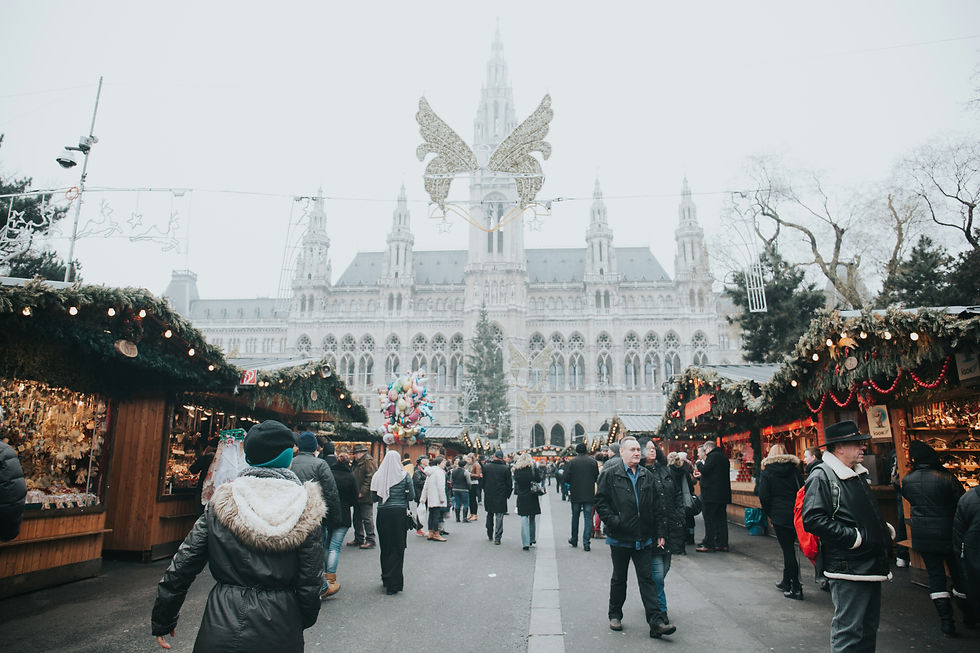
When to Visit: Vienna rewards visitors in every season, but spring (April through June) and early autumn (September through October) offer the most pleasant weather for exploring on foot. Summer is warm, lively, and culturally rich. The city's outdoor concert season is also extraordinary, though it is also the busiest period. Winter transforms Vienna into one of Europe's most magical Christmas market destinations, with the markets on Rathausplatz and in front of the Schönbrunn Palace among the finest on the continent.
Getting Around: Vienna has one of the finest public transportation systems in Europe — clean, efficient, and remarkably easy to navigate. The U-Bahn (subway), trams, and buses connect all major attractions seamlessly. A 24- or 48-hour Vienna City Card provides unlimited travel on all public transport and discounts at major museums and attractions. Most of the inner city's historic sites are also within comfortable walking distance of one another. Vienna is a deeply walkable city, and the pleasure of simply strolling its streets — particularly along the Ringstrasse and through the first district — is an experience in itself.
Language and Culture: German is the official language, though English is widely spoken throughout the tourist areas of Vienna. A simple Danke (thank you) and Bitte (please) are always appreciated. Viennese culture places a high value on courtesy and formality so a warm greeting when entering a shop or café is standard practice and warmly received.
Currency: Austria uses the Euro (€), and credit cards are widely accepted throughout the city. Having some cash is practical for smaller establishments, market stalls, and tips.
Tipping: Unlike some European cities, tipping in Vienna is standard and expected — approximately 10% at restaurants is customary. Round up the bill at cafés rather than leaving coins on the table.
What to Wear: Vienna is a walking city and comfortable shoes are essential because the historic center's cobblestones are beautiful but unforgiving. Smart casual attire is appropriate for most restaurants and cultural venues. For an evening at the opera or a classical concert, slightly more formal dress is traditional and appreciated, though strict dress codes are rarely enforced.
Best Value Tips: The Vienna City Card is excellent value for travelers spending multiple days in the city. Many of the city's finest experiences like walking the Ringstrasse, exploring the Naschmarkt, strolling through Schönbrunn's gardens are either free or very low cost. The Belvedere, Kunsthistorisches Museum, and Schönbrunn Palace all offer combined ticket options that reduce the overall cost of a full day of museum-going.
Vienna: A City That Earns Every Superlative
Vienna, with its captivating blend of imperial grandeur, artistic genius, culinary excellence, and genuine everyday warmth, offers one of the most richly rewarding days of any city in Europe. Each experience in Vienna, from the panoramic view from the Riesenrad to the golden shimmer of Klimt's The Kiss or the first sip of a perfectly brewed Melange to the sound of Lipizzaner hooves on baroque cobblestones weaves together into something that is more than the sum of its extraordinary parts.
Whether it's your first visit or a return to a city that already holds a place in your heart, Vienna delivers. It is a city that earns every superlative written about it and then quietly exceeds them.
Ready to Experience Vienna?
Whether Vienna is a highlight of your Danube River cruise, part of a broader Central European itinerary, or a destination in its own right, I'd love to help you create a journey that is thoughtfully planned and filled with meaningful experiences. As a travel advisor specializing in European river cruising and luxury travel, I can help you find the right itinerary, the perfect cruise line, and the shore experiences that make every hour in Vienna and beyond genuinely extraordinary.
Schedule your complimentary consultation today and let's start planning your Vienna adventure.
Planning your next vacation should feel every bit as easy and exciting as the trip itself—and you don’t have to figure it all out on your own. Download my complimentary guide, "5 Easy Ways to Upgrade Your Next Vacation to Luxury," packed with insider tips on effortless upgrades, savvy splurges, and expert insights to elevate your travel experience. Whether you're dreaming of lavish accommodations, exceptional dining, or exclusive experiences, this guide will help you transform your getaway into an unforgettable luxury escape without the hassle. Sign up here to get your free copy and start turning your next trip into the luxe adventure you've always envisioned.
P.S. For daily inspiration, expert advice, and stunning luxury travel ideas, be sure to follow me on Instagram!


Comments